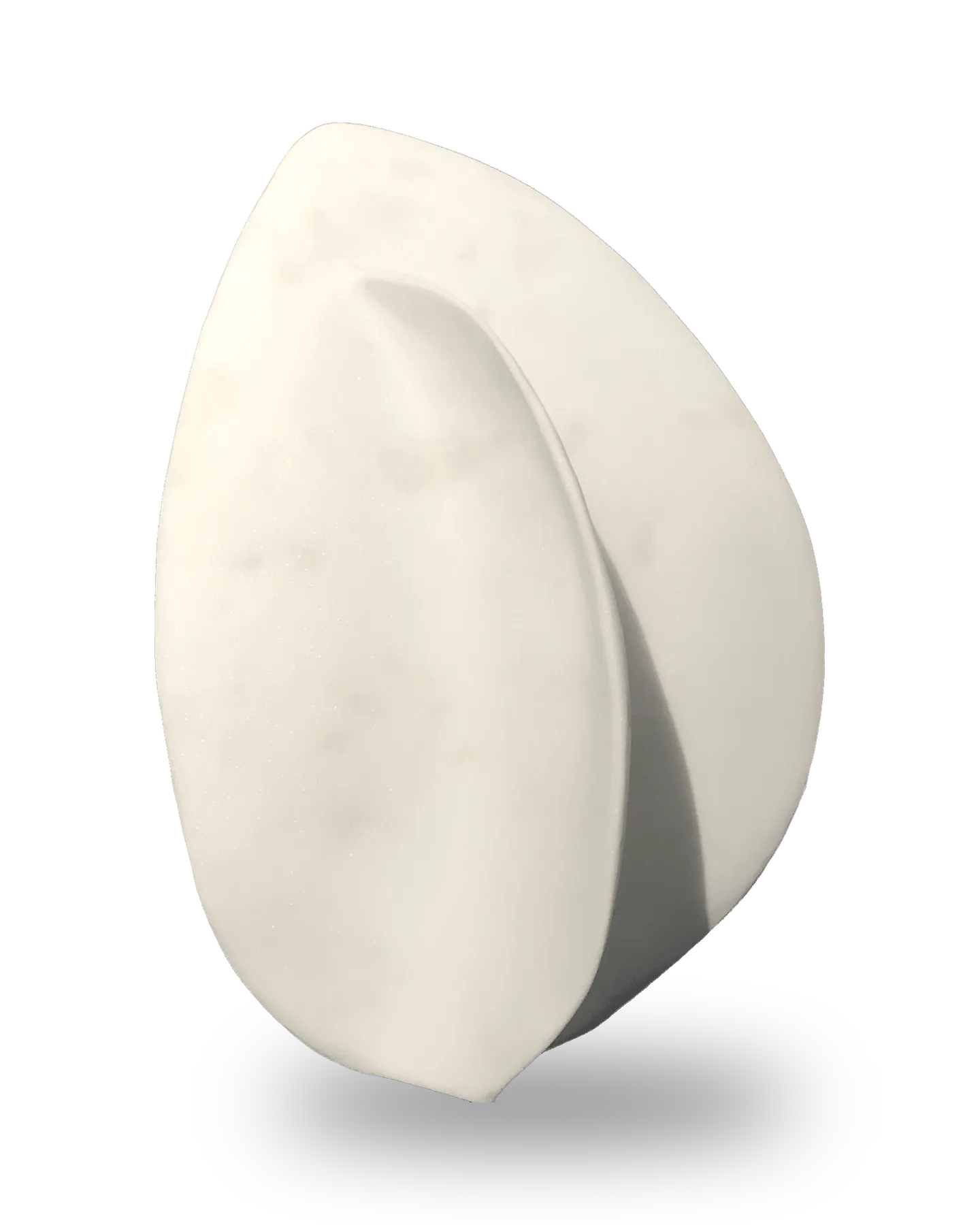
Luminous Namibian Marble.
LUNAMARA is a Namibian marble and sculptural heritage institution. Its stone is quarried at Karibib, in the heart of Namibia, and brought to form in our studio in Windhoek.
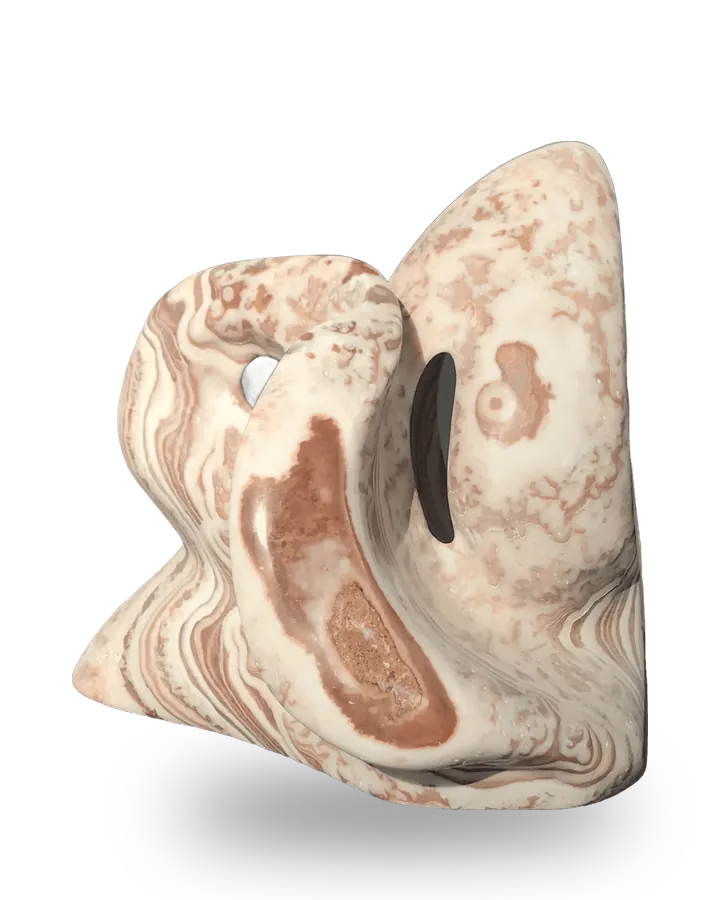
The name
The name holds three words. LU for light, NA for Namibia, and MARA from marmaros, the ancient word for marble: the shining stone. It is a name for the light within the stone, and for the stone that carries the light.
The history
LUNAMARA grew out of WHUDA Marble Art, the Windhoek studio of Winfried Holze. Winfried came to stone from architecture and urban design, and the hand that now shapes stone first shaped buildings. You can see it in the work: its sense of mass, of proportion, and of how an object holds a room.
The first works were carved in 2019. Since then the studio has formed a circle of Namibian and African sculptors and recorded more than a hundred works. LUNAMARA carries WHUDA forward as its first chapter, rather than replacing it.
WHUDA Marble Art ↗Why it matters to Africa
African sculpture is held in the great collections of the world, in wood, in bronze and in the stone of its regions. African marble is mostly absent. For three thousand years marble has been the material of permanence, and its story has been written mostly in European quarries.
LUNAMARA works marble with African hands and African provenance. That combination is a category of its own, and we intend to be its institution.
Why it matters to Namibia
Namibian marble comes from Karibib, in the Erongo region, and carries the character of one of the oldest landscapes on earth. Heat, pressure and time are visible in the crystal. Yet the stone has rarely been shown to the world that would value it most.
Namibia has marble of rare character, but no long tradition of carving it. LUNAMARA is establishing one, and with it a cultural export the country did not have before.
Namibian identity
The works speak of where they come from. Himba Head, Desert Ancestry, Roots of Namibia, Ethos of the Namib, Okurama Okomazimo: the collection carries the people, the land and the languages of Namibia into rooms far from it. Each work carries the name of the sculptor who made it.
Value added at home
Marble can leave a country as a raw block, or as a finished work. LUNAMARA adds the value here. Each work is carved, signed, recorded and certificated in Windhoek, by Namibian hands, before it travels.
The value added in the making stays where the stone was born, with the people who work it. The finished work then travels on to the one who receives it.
Skills passed on
In the studio the skill passes from master to apprentice, at the same bench. Our sculptors are Namibian and African artists, some trained at the College of the Arts in Windhoek, many from homes where art was never an easy path. The method is being written down and filmed, so that it never depends on one pair of hands.
Every acquisition forms the next sculptor.
The sculptors
Where we are going
By 2051, LUNAMARA intends to be the institution through which Namibian marble entered the canon of world sculpture, and to be run by sculptors it formed.
View recent works